
Many adults—teachers, parents—are overwhelmed, angry, and fearful with what is happening in the world. The wars, the environment, the political rancor, the outright cruelty being modeled by people in positions of power, the corruption and celebration of greed, the dishonesty. Anger and fear are appropriate responses. The checks and balances of our institutions have failed, as well as the checks and balances of individual morality and decency. The media keeps telling us that uncertainty is bad for business as though the health of capitalism is more important than the mental health of our kids. How do we explain this situation to kids—kids who are frightened and feeling hopeless?
I was talking about this dilemma with Betty Burkes, one of the great teachers and peacemakers in the AWTT portrait collection, and we came up with a list of suggestions about how to have conversations with kids who are troubled about what’s going on. (These suggestions are equally valuable when talking with anxious adults.)
Betty began by quoting to me a passage from Howard Zinn, author of The People’s History of the United States:

“To be hopeful in bad times is not just foolishly romantic. It is based on the fact that human history is a history not only of cruelty, but also of compassion, sacrifice, courage, kindness.
What we choose to emphasize in this complex history will determine our lives. If we see only the worst, it destroys our capacity to do something. If we remember those times and places—and there are so many—where people have behaved magnificently, this gives us the energy to act, and at least the possibility of sending this spinning top of a world in a different direction.
And if we do act, in however small a way, we don’t have to wait for some grand utopian future. The future is an infinite succession of presents, and to live now as we think human beings should live, in defiance of all that is bad around us, is itself a marvelous victory.”
Howard Zinn’s words beautifully reflect the guiding mission of Americans Who Tell the Truth—”providing models of courageous citizenship”—which is another way of inviting you into a community of people who struggled through hard times without giving up, without sacrificing their ideals and compassion. Just about all of the portrait subjects felt at times overwhelmed—angry, frightened, and lost—but decided to act for the common good anyway.

But, Betty said, before we start presenting role models, we have to listen carefully to the kids. What is at the heart of their troubles? We shouldn’t presume to know, and unless we know, our advice may only confuse them and add to their burden.
What many kids feel is that adults are mishandling the world, which means threatening their future. The kids need to be reassured that we love them and will do everything we can to protect them and allow them to flourish in a safe world.
Loving them does not mean we sugarcoat the truth. Tell them as much truth as you think they can handle. They suspect or know much of the truth anyway, but it’s important for them not to think we are editing it, hiding it, or being condescending. Having their suspicions verified by loving adults is actually reassuring. If adults don’t admit what the real issues are, how can they fix anything? We should not protect children from reality. Most governments and the people running them are in denial about reality—the realities of the deteriorating environment and governmental corruption. We prepare kids for asserting agency by presenting reality, not pretending the problems don’t exist or will fix themselves.
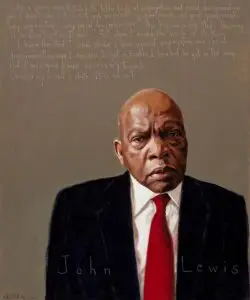
Talk about history and tell them about all the times when the world looked just as bleak as it does now and people survived. In the telling of that history, we remember that people survived, indeed, triumphed, because they resisted injustice, they built resilient communities, they organized, they refused to let other people take away their chance to lead fulfilling and meaningful lives. Show them examples from the gallery of AWTT portraits, and enumerate the possibilities. People did what is right, what’s fair. Read the history of Samantha Smith or Rachel Carson or John Lewis or Mother Jones or so many others and discuss the trajectory of their emotions and actions. Help them find organizations they can join. And join with them.
Practice joy—loving, singing, playing games, embracing beauty. A joyous spirit is the strongest bulwark of resistance. What’s the point of our lives, anyway, if we aren’t as joyful as we can be? It’s not an accident that Thomas Jefferson named the pursuit of happiness as one of our unalienable rights.
Model courage. Nothing reassures a kid more than an adult’s honest courage.
Model kindness, generosity, tolerance and gratitude. Model the attributes that we admire in others, that we want to see in our communities.
Have kids make art expressing their feelings. Talk about that.