“… as a teenager, I kept thinking, Why don’t the adults around here just say something? Say it so that they know we don’t accept segregation? I knew then and I know now that, when it comes to justice, there is no easy way to get it. You can’t sugarcoat it. You have to take a stand and say, ‘This is not right.’ And I did.”
There are a lot of famous people in the Americans Who Tell the Truth portrait gallery, but one of the least known epitomizes the intent of AWTT as much as anyone, and that’s Claudette Colvin who died yesterday at the age of 86 in Texas.
On March 2, 1955, seventy years ago, at the age of fifteen, in Montgomery, Alabama, her hometown, Claudette refused to move to the back of the bus when ordered to by the bus driver so a white person could take her seat. Six months later, in August, Emmett Till, would be murdered in Mississippi, and then on December 1, 1955, Rosa Parks would refuse to move from her bus seat in Montgomery.
Everyone remembers Rosa Parks because her civil disobedience launched the Montgomery Bus Boycott led by Martin Luther King, Jr., and that boycott triggered the Civil Rights Movement of the 1950s and ‘60s.
When ordered to move, Claudette announced, “The Constitution allows me to sit here.” No one in the front of that bus was interested in Constitutional niceties that might prohibit Jim Crow segregation. They wanted this uppity Black girl arrested—and she was.

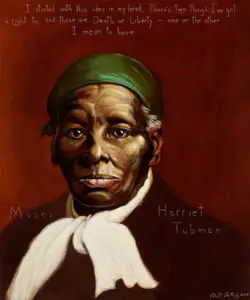
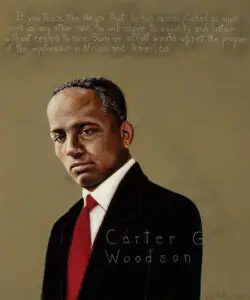
Claudette’s all-Black “separate but equal” high school had recently celebrated Negro History Week inspired by the great Black educator Carter G. Woodson. In order to eradicate internalized racism in Black folks, Woodson wanted students to be taught about illustrious and courageous Black people. Claudette relished learning the stories of Black heroes. Years later, when asked why she refused to move on the bus, she said that she wanted to move but when she tried to get up, she felt Harriet Tubman’s hand on her shoulder pushing her back down. She tried again and this time it was Sojourner Truth’s hand. She had to ask herself, what would those women do? There was only one answer. Claudette said, “History glued me to my seat.”
The case that went to the Supreme Court about Montomery’s bus segregation was Claudette’s, not Rosa’s. And that case ended Jim Crow on the buses.
Claudette’s heroism bends the arc of the moral universe toward justice. Without Negro History Week, Claudette would not have been exposed to the role models of Harriet and Sojourner, and they would not have been there to guide her actions. We want the people honored in AWTT to be the glue that enables other people to be like Claudette. If the teaching of history is not fully “woke,” there will be no role models. Claudette is gone, but she is now as present for us as Harriet and Sojourner were for her.