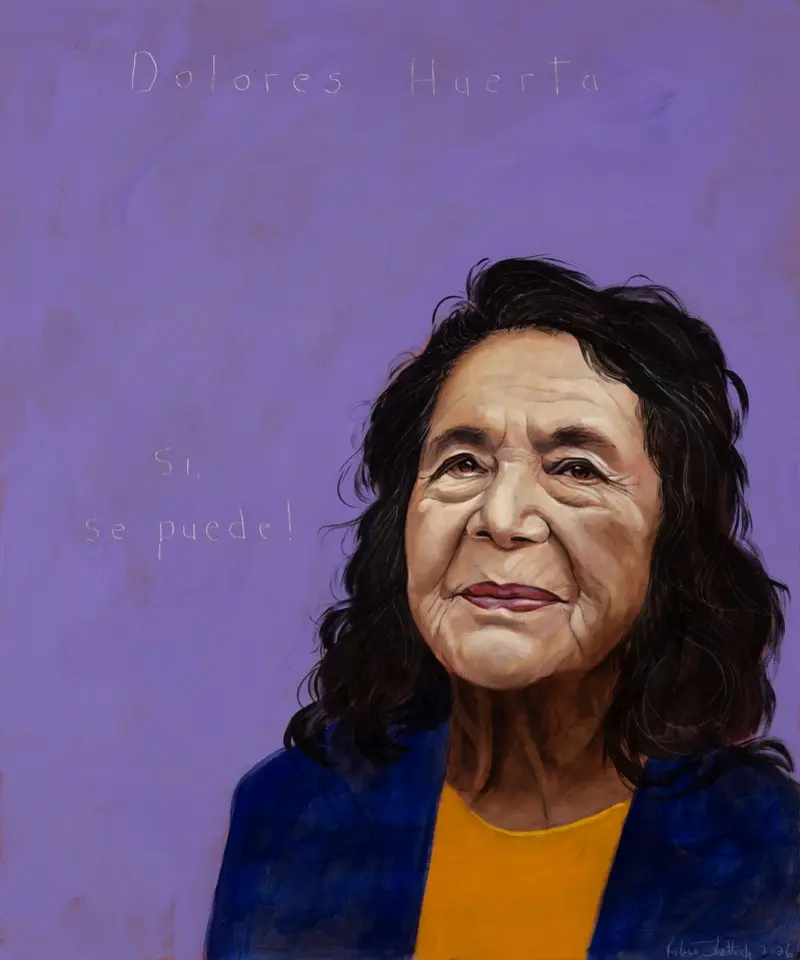
Dolores Huerta
Organizer, Teacher; Human Rights Advocate; b. 1930
“¡Sí, se puede!”
Biography
Few figures in American history have altered the landscape of labor rights and social justice as profoundly as Dolores Huerta. As co-founder of the National Farm Workers Association, Huerta spent decades fighting on behalf of the country’s most exploited laborers, leading the charge for higher wages, safer working conditions, and the right to unionize. She later expanded her efforts to support other communities, advocating for equality and justice on behalf of women and members of the LGBTQIA+ community. Her rallying cry “¡Sí, se puede!” (“Yes, we can!”) continues to inspire activists today.
Huerta credits her mother for making her the powerful woman she became. Alicia Fernández worked hard, saving enough money to open a seventy-room hotel in Stockton, California, where she moved with her children following her divorce from Dolores’s father. Alicia operated her establishment with acumen and compassion, welcoming people from all walks of life and often lowering or waiving charges for agricultural workers unable to pay full price. She befriended people from diverse backgrounds and created an open, multicultural environment. She instilled in Dolores a deep sense of community, responsibility, and empathy for the working class.
Born on April 10, 1930, Dolores Huerta grew up at a time of incredible economic difficulty for all Americans but particularly for American farmers and farm workers. A series of factors caused crop prices to plummet; farmers found it prohibitively expensive to harvest and transport their goods to market. Throughout the Great Depression crops wasted in fields while people went hungry. The financial difficulties fell hard on the backs of laborers, people of color, and those forced to abandon their own farms during the Dust Bowl.
In California’s Central Valley, Huerta saw workers toiling for minimal pay in fields that lacked access to clean drinking water and toilets. Workers were routinely exposed to toxic pesticides and had little job security. At the end of the day many returned home to labor camps where they lived in cramped conditions with substandard sanitation facilities. Life was a constant challenge, and each day was a struggle to put food on the table, get children to school, and find access to medical care.
Owners of industry militantly opposed workers’ efforts to organize and advocate for better wages and safer working conditions. This ongoing struggle between owners and workers would continue for decades. At the bottom of this hierarchy were brown and black-skinned workers who suffered from racism and women who were subjected to sexual harassment.
Despite consistently high academic performance and leadership in school organizations, teachers questioned how Dolores, a Latina being raised by a single mother, could possess such exceptional intelligence. Women were expected to raise children. Soon after graduation Huerta married her high school sweetheart. Huerta’s passion to help others strained a marriage in which her husband expected her to forgo work to care for him and their two children. The marriage ended in divorce after three years.
Huerta returned to school and earned her provisional teaching certificate at the University of the Pacific. “[As a teacher] I couldn’t tolerate seeing kids come to class hungry and needing shoes,” Huerta said. “I thought I could do more by organizing farm workers than by trying to teach their hungry children.” Thus began Huerta’s journey to fight injustice.
Her first job with the Community Service Organization (CSO), a grassroots initiative out of Los Angeles, had Huerta participating in voter registration drives, pressing local governments for neighborhood improvements, and lobbying the California legislature to pass progressive measures. She loved working with like-minded people and proved herself a staggering force. It was at the CSO she met her second husband Ventura Huerta, with whom she had five children, and labor leader and union activist Cesar Chavez, with whom she would found the National Farm Workers Association (NFWA).
Huerta’s exceptional communication and advocacy skills placed her in the position of strategist and lobbyist for the NFWA. She faced her first major challenge in 1965 when eight hundred Filipino-American farm workers walked off fields in Delano, California, demanding higher wages. Property owners, hoping to replace these workers with farm laborers of Mexican descent, would be disappointed. Rather than act as scabs, members of the NFWA joined the strike to forge a powerful, multi-ethnic coalition. The Delano Grape Strike presented an enormous risk for workers. Not only would they lose their wages, but many lived in company housing and could be evicted with little notice. But with the support and guidance of the NFWA, they stood up to fight the injustice. It soon became clear that local law enforcement officials and courts would not defy the owners of industry. Huerta could see the battle needed to be taken to a bigger stage and orchestrated a national boycott of California table grapes. “We did not choose the grape boycott,” Huerta wrote, “but we had chosen to leave our peonage, poverty, and despair behind [and] the boycott was the only way forward the growers left to us.” Huerta mobilized workers’ unions, civil rights organizations, students, and consumers in a brilliant campaign that successfully altered consumption by making Americans aware that the fruit on their tables was the product of human exploitation. In 1970 the economic impact became too great to ignore; growers finally agreed to meet with Huerta who helped secure wage increases, health benefits, disability insurance, and the regulation of dangerous pesticides in the fields.
Over and over again Huerta proved herself a powerful leader and indispensable force in the fight for equality and justice, but as a woman she felt the scorn of a society focused on masculine leadership. Many years later, in 2026, she revealed she had been sexually molested by her work partner Cesar Chavez. “I had experienced abuse and sexual violence before, and I convinced myself these were incidents that I had to endure alone and in secret,” she wrote. She worried revealing the truth would hurt the movement. She also feared no one would believe her.
Huerta’s activism required immense personal and physical courage. She nearly lost her life at a peaceful demonstration in San Francisco when police officers tried to clear protestors from the area and beat the 58-year-old Huerta with their clubs. She suffered six fractured ribs and a ruptured spleen that required emergency, life-saving surgery.
Eventually, Huerta’s efforts and sacrifice were recognized. In 1993, she became the first Latina inducted into the National Women’s Hall of Fame. A grant from the Puffin/Nation Prize for Creative Citizenship helped her start the Dolores Huerta Foundation. In 2012, President Barack Obama awarded her the Presidential Medal of Freedom, the nation’s highest civilian honor. California Governor Gavin Newsom recently issued a proclamation declaring April 10, 2026, as “Dolores Huerta Day.”
At the age of ninety-six, Dolores Huerta remains a vibrant force for social change. Her life stands as an enduring blueprint for democratic participation, proving that change does not trickle down from the halls of power but rises from the ground up through collective action. Huerta ‘s life story is a testament to the power of grassroots organizing, fierce determination, and an unwavering belief that ordinary people can challenge powerful systems and win. “¡Sí, se puede!” Yes, we can.
– authored by Julie Gronlund (2026)
Related Portraits

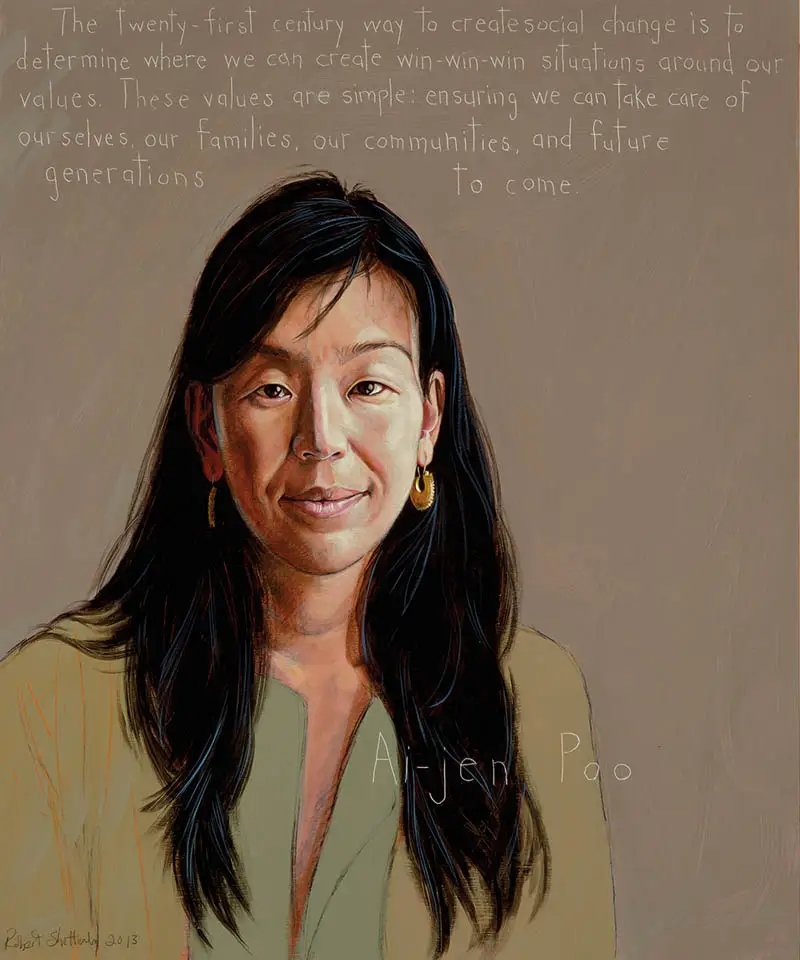
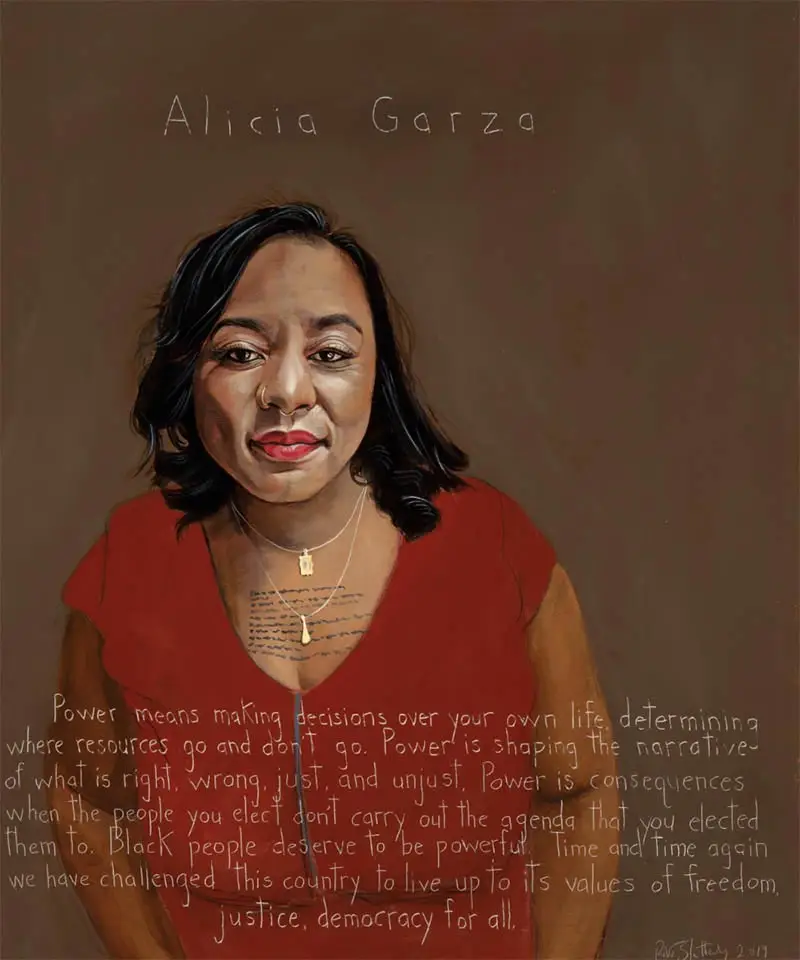
Programs
Americans Who Tell the Truth (AWTT) offers a variety of ways to engage with its portraits and portrait subjects. Host an exhibit, use our free lesson plans and educational programs, or engage with a member of the AWTT team or portrait subjects.

Education
AWTT has educational materials and lesson plans that ask students to grapple with truth, justice, and freedom.
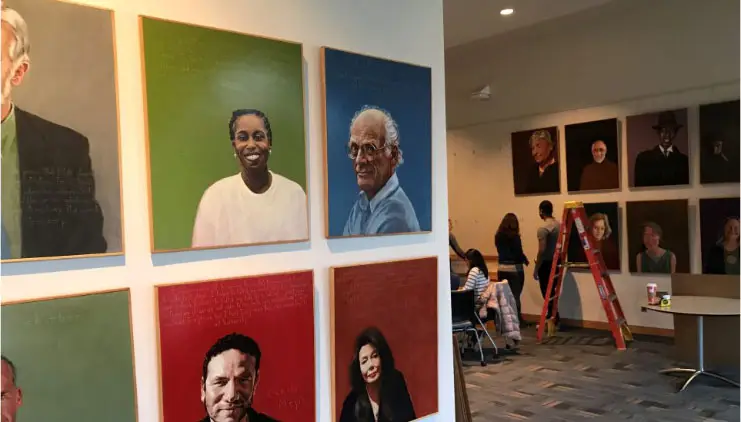
Exhibits & Community Engagement
AWTT encourages community engagement programs and exhibits accompanied by public events that stimulate dialogue around citizenship, education, and activism.