Our Real Work
It may be that when we no longer know what to do
we have come to our real work,
and that when we no longer know which way to go
we have come to our real journey.
The mind that is not baffled is not employed.
The impeded stream is the one that sings.
– Wendell Berry

Dear Friends,
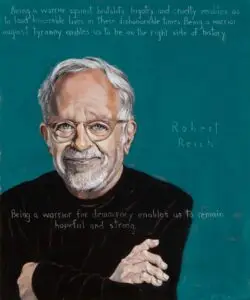
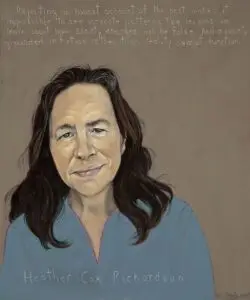
It’s been some time since I’ve felt like adding my voice to the cacophony of voices attempting to describe and understand the times we’re in. As Wendell Berry suggests in his poem, the moral and political situation we are in is baffling, indeed—overwhelming. It seems to me our politics are like an impacted sewage system, totally clogged and requiring some nasty roto-rooting to sludge it out. How did we get here? How do we move forward? Many of the people featured in this project—people like Chris Hedges, Robert Reich, and Heather Cox Richardson—write perceptively and profoundly to explain our moral, economic, and historical dilemmas. I hope you read them.
Even so, the crises mount. Government levels of incompetence, corruption, and cruelty expand exponentially. The notion that the proper function of a democratic government is to “promote the general welfare” seems quaint and ludicrous in the face of a handful of despicable oligarchs amassing absurd fortunes while strangling the possibility of healthy ecological survival and the rule of law, profiting from genocide and war crimes. At this moment “general welfare” is a euphemism for flushing out the entire stinking mess.
My relationship to this time is complicated by my poor health. At seventy-nine years old I’m dealing with both heart and kidney disease. In a curious way, my heart and kidneys are behaving like the people of red and blue states. That is, the kidneys insist for their health on lots of water; my heart wants less. Instead of agreeing to work together for my common good, each is sabotaging the other. At AWTT we exhort people to recognize their common interests and work together. I’m doing the same for my recalcitrant organs—with a similar level of success.
We’ve all heard the hopeful statement that the genius of the U.S. constitutional system is that it is self-correcting. The assumption is that the separation of powers, aided by election cycles, are guided by people intelligent and good-hearted enough to want to solve the problems of poor governance; that is, once astray, the system will—almost magically—bend itself onto a stable and equitable path because the Founding Fathers were geniuses and the American people will—having explored all the alternatives—do the right thing.
Such an idea, it seems to me, exists and persists because of the pernicious belief in American exceptionalism: a superior people behaves in a superior way and deserves superior outcomes. It’s funny that people who purport to embrace democracy and equality also embrace exceptionalism. The two ideas are in direct contradiction. There is no current evidence that when Americans are lost in the wilderness of dishonesty and corruption, they will stumble onto the yellow brick road and all will be well.
In fact, such a belief may make self-correction less—rather than more—likely.
I would like to think, too, that my old, failing heart and kidneys are guided by the magic of self-correction. Perhaps I should tell my doctors that there’s no need to operate after all; my exceptionalism will carry me through. Such is the dangerous absurdity of wishful thinking.
In fact, I do trust in the expertise of the docs. Their ability to noodle around inside my heart and get it pumping better fills me with gratitude and awe. And a betrayed and angry populace may well do the same for the heart of the country— do what citizens are supposed to do. We’ll see in November.
What Irks Me
As we approach the crucial midterm elections, Democrats are urging Democrats to stay focused on economic issues—issues of affordability and corruption. Trump’s criminal war of choice on Iran has raised energy and food prices, spiked interest rates and inflation. And, besides enriching himself to the tune of billions, his corruption and tax breaks for the wealthy have increased our obscene wealth disparity. It’s like the superrich have boarded an exclusive luxury liner and set sail. They call their ship America. Why don’t they simply call it Greed? If they weren’t taking the wealth of the nation with them, we’d say, Good riddance, may you enjoy nothing but stormy seas!
What irks me is the assumption that what regular folks care about is limited to the cost of meat and eggs, gas and mortgages. Is this what folks care about, or is it what they are told they care about? I ask myself: Do I care more about whether I pay $2.98 or $4.05 for a gallon of gas, or do I care more that my taxes are making ethnic cleansing and genocide possible in Gaza and the West Bank? Do I care that my taxes are subsidizing record profits for the merchants of death in Israel and the Middle East? As I check peanut butter and hamburger off my shopping list, where can I check off blood money or profitable dismemberment of children?
Yes, the oligarchs have stolen the wealth of the country, but they have also stolen our moral compass. When the only mantra is “It’s the economy, stupid!,” how stupid do we have to be to not ask where the money is coming from and where it is going? How cynical and callous are we if all we ask is for cheaper gas rather than gas untainted with complicity in murder?
A rallying cry to throw out the Republicans because they lied about lowering the cost of living is morally insufficient without wanting to throw out an economy of militarism that supports both parties killing indiscriminately. When neither party will fully disavow the U.S. embrace of genocide and imperialism, there is no such thing as the lesser of evils.
Robert Shetterly