 Monarch Learning Academy is an independent Christian preschool, elementary and middle school for children ages one year through 8th grade in Orlando, Florida. What began for AWTT as a modest exhibit of a few portraits blossomed into an exceptionally exciting community action project. When artist Robert Shetterly left Maine to visit the school in mid-September 2024, he had no particular expectations. Through this case study, learn how an AWTT portrait exhibit can inspire a school community to fully embrace AWTT’s message of art inspiring action.
According to Monarch Director, Marguerite McNeill, this is how the vision grew: “What was initially planned as a month long study, one thing has led to another, and then another, giving our students, faculty and community exciting opportunities to be exposed to and learn about people and advocacy that was beyond our expectations.
“Offering this experience to our students, ended up influencing not only the students, but their immediate and extended family, educators and truly the community at large beyond Monarch.
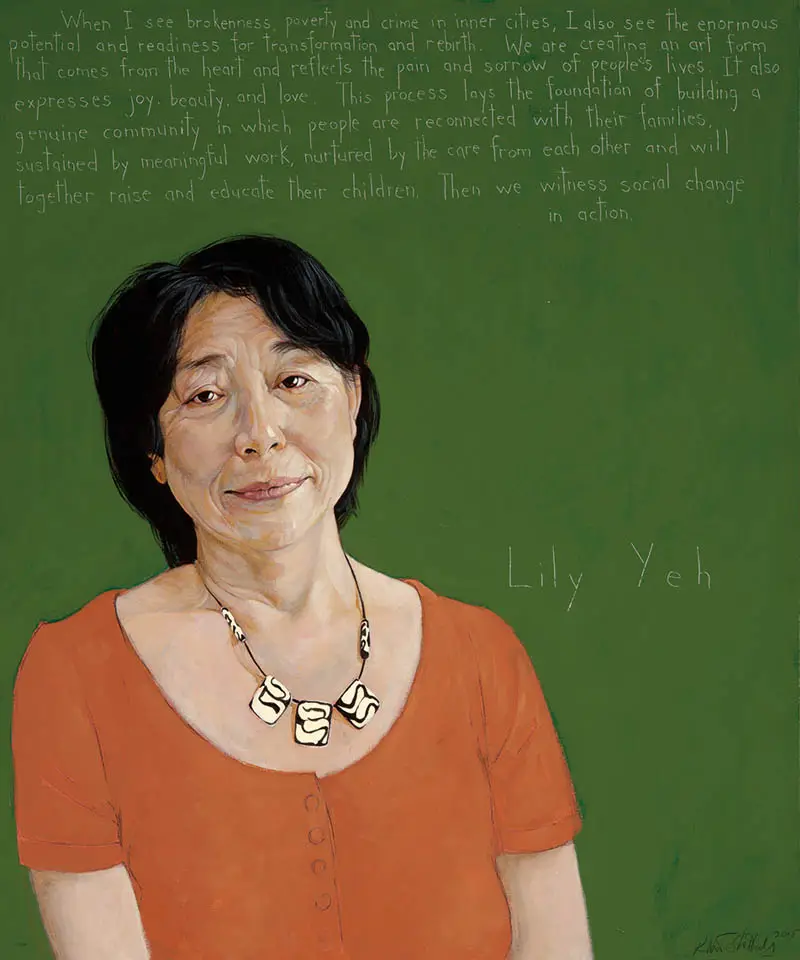
 “Because of our time with Robert, he has offered us opportunities to meet and converse with other Truth Tellers such as Lily Yeh and recommended learning about other individuals whom he has painted that relate to the efforts our students are interested in. We are grateful for these opportunities because it may lead us in exciting directions that we would not otherwise be able to accomplish.”
The initial plan was to host an exhibit of twelve AWTT portraits. An individual portrait was assigned to each grade, kindergarten through eighth grade. “Each class worked on familiarizing themselves with the subject of a portrait. Monarch typically begins each school year talking about identity and community – and this year they added a name and face to that conversation. Our students came to know the subject of their portrait and the idea that change often comes when ‘ordinary people’ do extraordinary things.” Follow this link to see an outline of the questions each class discussed. These questions, along with other AWTT lesson plans, were used by Monarch’s teachers to create their classroom activities. Connie Carter, AWTT’s Education Director also consulted, to help teachers customize existing AWTT lesson plans for their students.
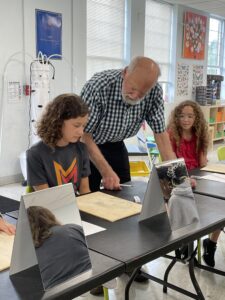 Mid-way through the exhibit, Monarch hosted a visit by AWTT artist Robert Shetterly, who engaged with the students in a variety of ways.
- A group of students worked on self-portraits after watching Robert’s video Show Us Who You Are. Robert spent time talking to the group and working individually with each student on their self-portrait.
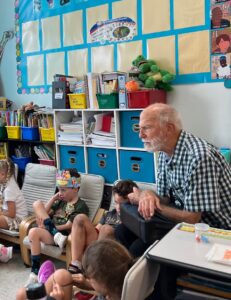
- Robert visited a variety of classrooms, listened, and contributed to the conversation with the students while they spoke about ‘their’ portrait. Robert visited a 1stgrade, 2nd grade and a 3rd grade class.
- At the end of the day, Robert was invited to a Town Hall gathering of 5thgrade – 8th grade students. The hour was spent talking and answering questions about a range of topics centered around the portraits led by Robert. This evening was open to the public and drew a crowd of not only the families of our Monarch Community but also the community at large.
According to McNeill, “Robert’s visit to our campus was not only inspirational but also quite meaningful. His genuine desire to connect with youth, educate them, inspire them to have a voice and to listen to their ideas was obvious. Our children easily related to him, trusted his words and were motivated to find within themselves a force to question, express an option and look for solutions.”
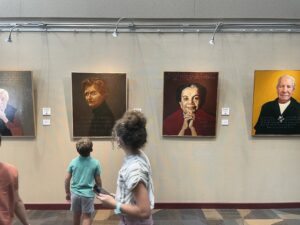
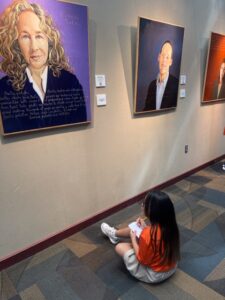 Each class, 3rd grade – 8th grade took a field trip to the gallery where the portraits were exhibited. Besides students and faculty, many parents accompanied their child on this field trip. Faculty and parents were given short bio’s of each portrait so that they could highlight each one. There was also a QR code with the full bio.
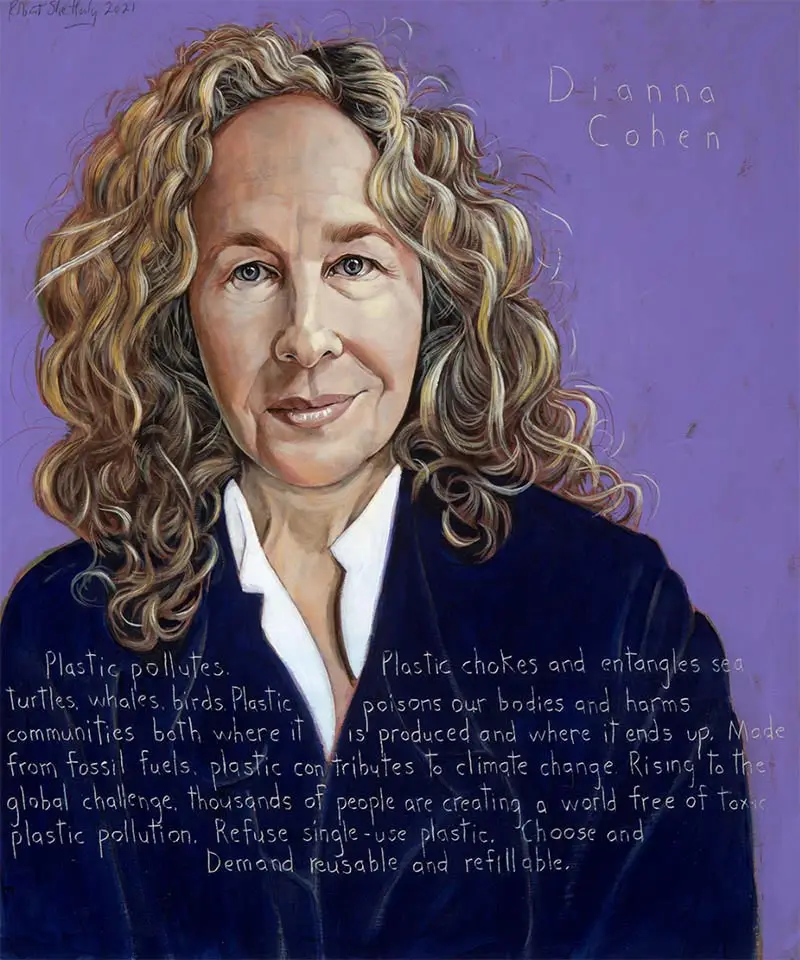
After studying the work of portrait subject Dianna Cohen, one of Monarch’s core classes, “Monarch Serves,” invited Dianna to speak to them via a Zoom call. Inspired by Dianna, the students decided to become part of Monarch’s ChangeMakers! initiative. Their first project, named the “Pass on Plastic Initiative, ” will encourage the school to eliminate one single-use item each month. Their September item for elimination is single-use plastic water bottles. “Our hope is that this effort will multiply and as we add items monthly, we will continue to eliminate the items we already committed to so that our initiative builds into something that truly has an impact on our environment. We are aiming to steer away from single use products and start thinking about reusable and refillable alternatives.”
Ideas for future projects of the “Pass on Plastic” group include:
- Advocate to Publix, grocery store giant; address their desire and agreement with the state’s ban on the ban to eliminate plastic bags.
- Write to Publix corporate headquarters.
- Host an in-person discussion with Anna Eskamani, Florida House of Representatives representative.
- Write to Governor DeSantis.
- Monarch’s eighth grade will be traveling to Washington, DC in person this spring to advocate for reducing plastic pollution.